
Exploring kit-of-parts construction, the Timber Tectonics team designed and prototyped an emergency shelter using modular stressed-skin panels, facilitating building expansion and sustainable reuse in alternative configurations. The prefabricated stressed-skin wood box modules can be rapidly assembled, disassembled and repurposed into new configurations with little to no modification. The class enjoyed having the sponsorship of the City of Silverton through the UO Sustainable City Year Program.

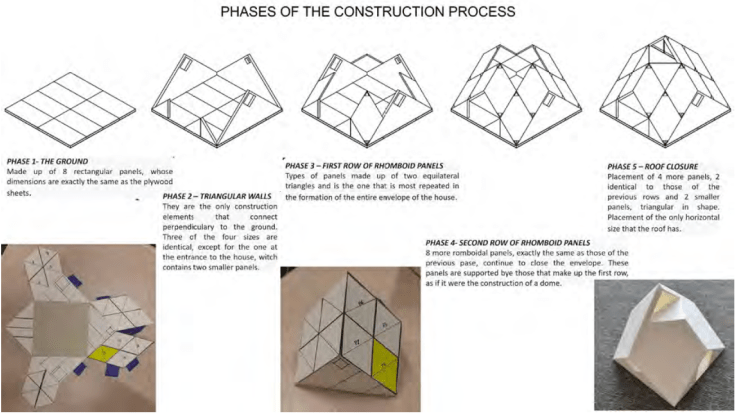
The class got to work with visiting scholar Prof. Marco Aurelio Rebaza Rodriguez from the Faculty of Architecture, Urbanism and Arts of the Antenor Orrego Private University of Trujillo (FAUA-UPAO) who demonstrated a concept for a polygonal family shelter.
Students were also inspired by the Liina transitional shelter held together by rachet straps, designed by the Aalto University Wood Program students. Rebecca Littman-Smith of Scott Edwards Architects in Portland, who participated in the program as a Fulbright Scholar, introduced the project. Our students mimicked how the building was constructed in narrow sections on the ground, then assembled like bread slices.

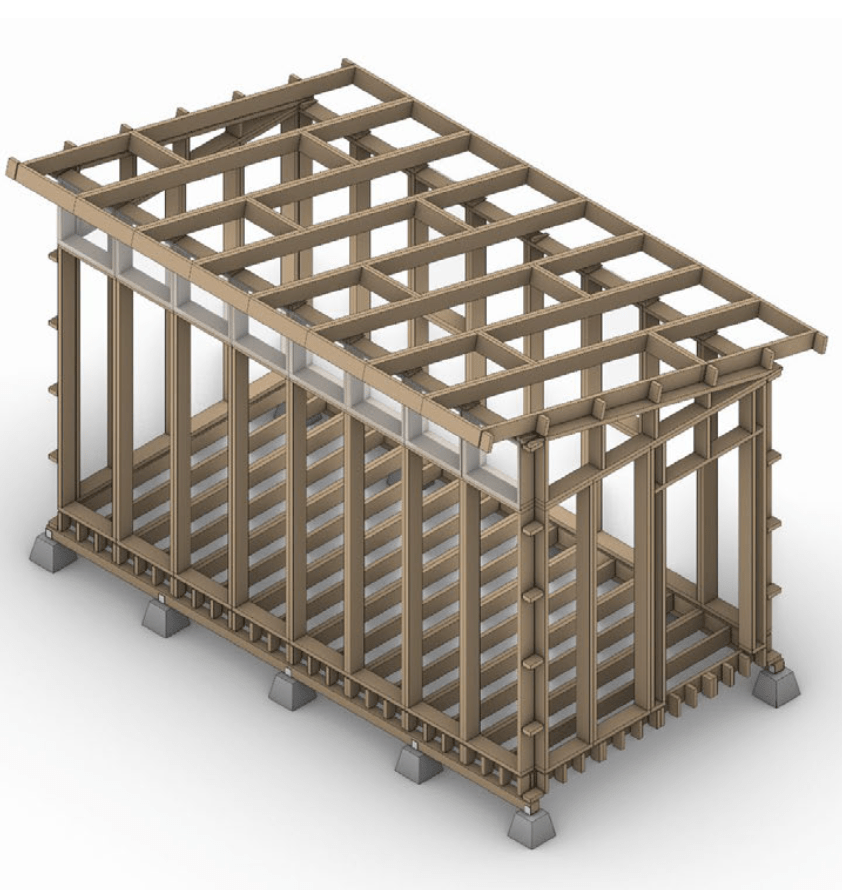
The students devised linear wood connection pieces to that fit the outside corners of standard 2’x8′ modules with bolted together.

Students prototyped modules at both Oregon State University and University of Oregon, then got help on production from the Tallwood Design Institute (TDI). All students participated in assembling sections of the shelter at TDI’s courtyard with help from their staff at the end of the term and during Winter break. Hillary Johnson of OSU and Grant Perry of UO put in exceptional effort to bring the project together. For a full report written by KB Baidoo, please see below.
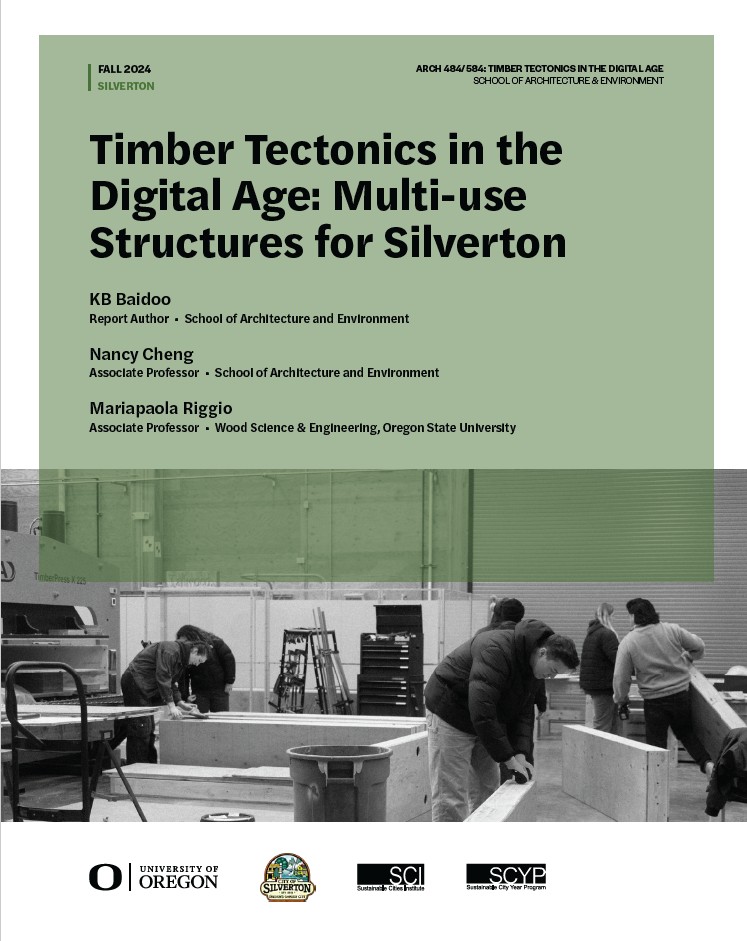
 Timber Tectonics in the Digital Age
Leave a comment